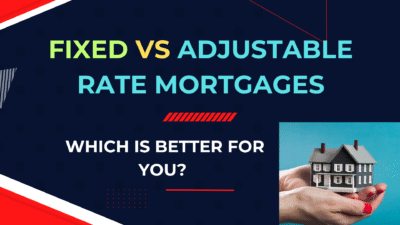
The dream starts with a front door
Imagine this — you’ve been scrolling through Zillow late at night, looking at homes you can picture yourself living in. There’s one that stops you mid-scroll: a cozy home with a sunlit porch, big kitchen windows, and that exact “welcome home” vibe you’ve been chasing. But then reality hits — the price tag looks like a phone number. You don’t have that kind of cash lying around.
That’s where a mortgage steps in — the bridge between dreaming of a home and actually owning it.
But what is a mortgage, exactly? How does it work? And why is everyone making it sound so complicated?
Let’s break it down — no banking jargon, no fine-print confusion.
🧩 What Exactly Is a Mortgage?
A mortgage is essentially a loan to buy real estate — typically a home. You get a loan from a lender — most often a bank, credit union or online mortgage source — and pay it back over time, including interest.
Here’s the catch: The home itself is collateral for that loan. That means that if you stop paying, the lender can take back your home through a process called foreclosure.
Think of it like this:
You’re promising to pay back a large loan, and until you do, the bank technically “owns” part of your home. Each monthly payment you make buys a little more of it back.
💡 Why It’s Called a “Mortgage”
The word mortgage in fact is derived from an old French term that means “death pledge.” That sounds dramatic, but all that really means is a commitment that “dies” when you either pay the loan off or they take the property from you when payments stop.
It’s the ultimate long-term promise — one that can shape your financial life for years.
Also read:
Master Mortgages, Loans & Financial Freedom – Detailed guide
🏠 How a Mortgage Works (Step-by-Step)
Let’s go through the process the way most homebuyers experience it.
1. Application
You start by applying for a mortgage. The lender checks your income, credit score, debts, and assets to see if you qualify — and how much they’re willing to lend you.
2. Approval or Pre-approval
Once your information checks out, you may receive a pre-approval letter. This shows sellers you’re a serious buyer and tells you how much house you can afford.
(Quick note: pre-qualification is just a rough estimate, while pre-approval is an official confirmation after a credit check and document review.)
3. Home Shopping
Armed with your pre-approval, you shop for homes that fit your price range and comfort zone. Remember — being approved for a certain amount doesn’t mean you should spend that much.
4. Closing the Deal
Once you find “the one,” you make an offer. When it’s accepted, you go through inspections, appraisals, and a mountain of paperwork. At closing, you pay your down payment, sign the final documents, and — congratulations — you’re officially a homeowner!
💵 The Building Blocks of Your Monthly Mortgage Payment
Every month, your mortgage payment covers more than just the money you borrowed. It usually includes these four key parts — often called PITI:
- Principal – This is the chunk of your payment that goes toward paying off the amount you actually borrowed.
- Interest – The cost of borrowing the money. This is how lenders make their profit.
- Taxes – Property taxes are often collected by the lender and paid to your local government through an escrow account.
- Insurance – Homeowners insurance protects your property; sometimes this also includes private mortgage insurance (PMI) if your down payment was less than 20%.
So when you make that monthly payment, you’re not just paying off the home — you’re also covering taxes, insurance, and the cost of borrowing.
🔢 Example: How Mortgage Payments Are Split
Let’s bring this to life with real numbers.
Suppose you take out a $300,000 mortgage at a 4% fixed interest rate for 30 years.
Your monthly payment (principal + interest) would be about $1,432.
But here’s the kicker:
In your first payment, only about $432 goes toward the principal. The remaining $1,000? That’s all interest!
Over time, the balance shifts. By the final years of your loan, most of your payment goes toward principal instead of interest. This gradual shift is called amortization — a fancy word for how your payments are structured over time.
🕒 The Amortization Story: Slow and Steady Wins
It can be frustrating to begin with — you’re writing checks for thousands of dollars a month and barely see your balance move. But it’s like ascending a hill: the first steps are steep, but then you hit your stride and start moving faster.
As the years go by, your equity — or the portion of the home that you actually own — begins to grow more rapidly.
💰 Understanding Equity: Your Hidden Wealth

Home equity is simply the difference between what your home is worth and what you still owe on your mortgage.
Let’s say you bought a home for $400,000 with a $80,000 down payment, so your loan is $320,000. A few years later, you’ve paid your loan down to $280,000, and the home’s value has risen to $500,000.
Now you have $220,000 in equity — this is actual usable wealth. If necessary, you can tap into it later through refinancing or a home equity loan.
🔄 Types of Mortgages Explained
Different mortgages fit different lifestyles, budgets, and risk levels. Here’s a quick overview:
1. Fixed-Rate Mortgage
The interest rate stays the same for the entire term — often 15, 20, or 30 years.
✅ Predictable payments
✅ Easy budgeting
❌ Slightly higher starting rate than adjustable loans
2. Adjustable-Rate Mortgage (ARM)
Starts with a fixed rate for a few years (say 5 or 7), then adjusts based on market rates.
✅ Lower initial rate
❌ Payments may rise later
3. Interest-Only Mortgage
You pay only interest for the first few years. When that ends, payments jump sharply as you begin paying principal too.
✅ Lower early payments
❌ Risky if your income doesn’t rise later
4. Government-Backed Loans
- FHA loans – Great for first-time buyers; low down payment (as little as 3.5%).
- VA loans – For military service members and veterans; often no down payment.
- USDA loans – For rural homebuyers; also low or zero down payment.
5. Reverse Mortgages
Available for homeowners aged 62 and older who want to access their home’s equity as cash or monthly income — repaid later when they move or sell.
💸 How Much Should You Put Down?
Most people aim for a 20% down payment — it shows lenders you’re serious, lowers your loan amount, and helps you skip PMI (Private Mortgage Insurance).
But if you don’t have that much saved, don’t panic. Many buyers put down less, especially first-timers. FHA loans, for instance, allow as little as 3.5% down.
👉 Pro tip: Don’t empty your savings completely. Leave some cushion for emergencies, moving costs, and early repairs.
⚙️ What Else You’ll Pay For
Beyond the mortgage itself, there are other costs that often catch first-time buyers off guard:
- Closing costs — Typically 2–5% of the loan amount (for things like appraisals, title searches, and legal fees).
- Property taxes — Paid annually or included monthly via escrow.
- Homeowner’s insurance — Protects your home from damage or loss.
- Maintenance & repairs — A good rule of thumb: budget 1–2% of your home’s value each year for upkeep.
- HOA fees — Common for condos or neighborhoods with shared facilities.
These aren’t small — so factor them in when deciding what you can really afford.
🧭 How to Choose the Right Mortgage
Picking the right mortgage isn’t just about interest rates. It’s about what fits your life and long-term plans. Here’s how to make a smart decision:
- Check your credit score first.
Higher scores get lower rates. Try improving your credit before applying if you can. - Compare lenders — seriously.
Don’t settle for the first offer. Compare rates, fees, and terms from multiple banks or brokers. - Look at APR, not just interest.
The Annual Percentage Rate (APR) includes fees, giving a truer picture of what you’ll pay. - Understand the term length.
- 30-year = smaller payments, more total interest.
- 15-year = bigger payments, but you save huge on interest.
- Ask about flexibility.
Can you make extra payments without penalties? Can you refinance later?
💬 Real-Life Example: The 15-Year vs. 30-Year Debate
Let’s say you borrow $300,000.
| Term | Interest Rate | Monthly Payment | Total Paid | Total Interest |
| 30-Year Fixed | 4.0% | $1,432 | $515,608 | $215,608 |
| 15-Year Fixed | 3.5% | $2,145 | $386,037 | $86,037 |
That’s nearly $130,000 less interest with the 15-year option — but your monthly payment jumps by around $700.
It’s all about tradeoffs. If you can comfortably handle higher payments, go for the shorter term. If not, the 30-year gives flexibility.
💪 Smart Strategies to Pay Less in Interest
- Make one extra payment per year. Even one extra payment annually can shave years off your mortgage.
- Round up your payments. If your payment is $1,432, pay $1,500. The difference chips away at your principal faster.
- Refinance when rates drop. If rates fall significantly, refinancing can save thousands.
- Avoid high-interest debt. Keep your credit healthy so you always qualify for better rates.
⚠️ Common Mistakes Homebuyers Make
- Buying at your max approval limit. Leave breathing room for life’s surprises.
- Forgetting about upkeep costs. Homeownership isn’t just monthly payments — it’s ongoing care.
- Ignoring PMI. Once you’ve built 20% equity, ask to remove it.
- Not reading loan documents carefully. Hidden fees and penalties can cost you later.
- Skipping lender comparisons. Even a 0.25% rate difference can add up to thousands of dollars.
❓ Frequently Asked Questions
Q: Do I need a 20% down payment to buy a home?
No! Many programs allow smaller down payments — FHA loans go as low as 3.5%, and VA or USDA loans can be 0%. You’ll just pay PMI until you build more equity.
Q: What happens if I can’t make my mortgage payments?
Contact your lender immediately. You may qualify for forbearance, a repayment plan, or a loan modification to avoid foreclosure.
Q: What’s the difference between prequalification and preapproval?
Prequalification is a quick estimate. Preapproval involves documentation and a credit check — it’s stronger and more credible when you make offers.
Q: Can I pay off my mortgage early?
Yes, but check for prepayment penalties. Extra payments toward principal can reduce interest and loan length dramatically.
Q: Should I refinance my mortgage?
If current rates are at least 0.75%–1% lower than yours, and you’ll stay in the home long enough to offset closing costs, refinancing may make sense.
🌟 The Bottom Line: Your Home, Your Future
A mortgage is more than a loan — it’s a commitment, a financial partnership and, for many, the cornerstone of family life and future wealth. It can feel overwhelming at first, but once you understand how it works, it becomes empowering.
And remember every payment is not just money out the door, it’s a step toward something long-term.
A step toward stability.
A step toward the front door of your very own home.
And one day as you glare at the final payment receipt and see that house is 100 percent all yours — no bank, no lender, no strings attached — it will be worth every second.