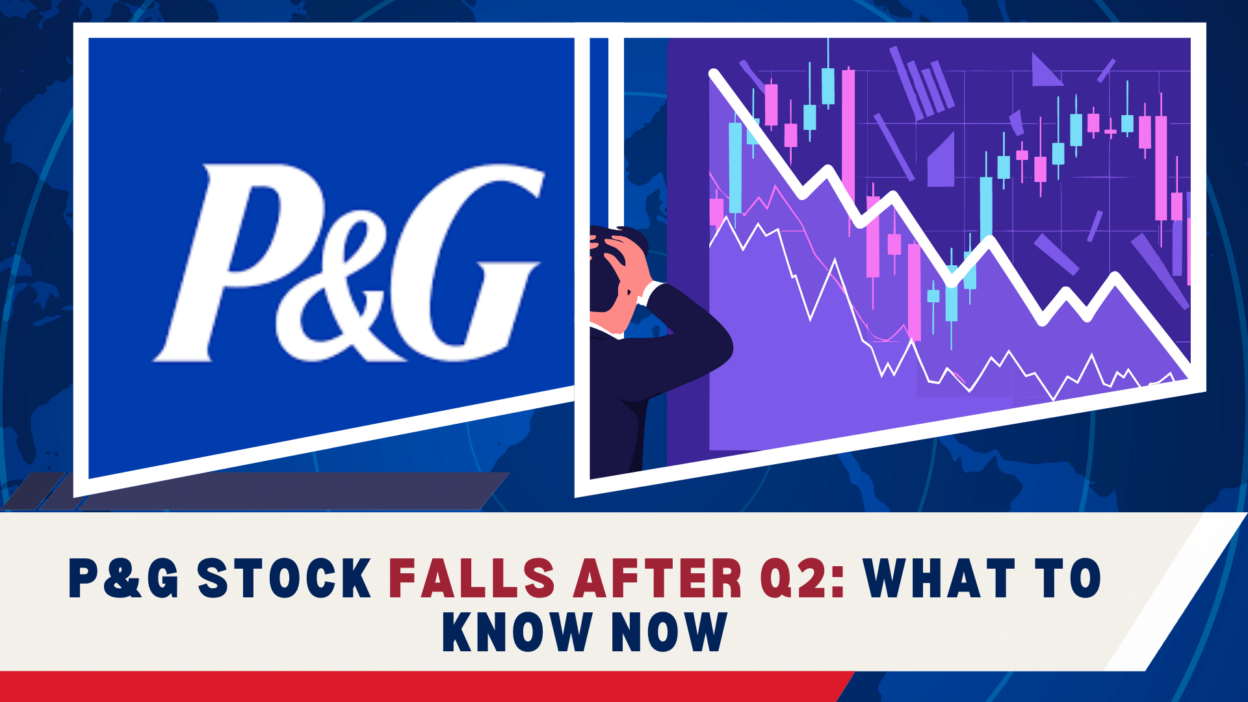
Procter & Gamble (P&G) (NYSE: PG), one of the world’s largest and most trusted consumer goods companies, saw its stock slip after reporting mixed results for the second quarter of fiscal year 2026. While profits held steady, weaker-than-expected sales, falling product volumes, and rising tariff costs raised fresh concerns among investors.
Shares of PG fell around 1%–1.7% following the earnings release on January 22, 2026, reflecting disappointment despite the company reaffirming its full-year guidance.
So, what really happened in Q2—and what does it mean for long-term investors? Let’s break it down.
Q2 FY2026 Earnings Overview: Profits Hold, Sales Miss
For the quarter, Procter & Gamble reported:
- Net sales: $22.2 billion (up 1% year over year)
- Analyst estimate: ~$22.3 billion
- Organic sales growth: 0% (flat)
- Core EPS: $1.88 (unchanged from last year)
- Diluted EPS: $1.78 (down 5%)
While earnings per share met expectations, revenue fell slightly short. Pricing gains were completely offset by a 1% decline in volumes, showing that consumers are buying fewer items even as prices remain high.
Operating cash flow remained strong at $5.0 billion, allowing P&G to return $4.8 billion to shareholders through dividends and share buybacks during the quarter.
Margins Under Pressure From Tariffs and Product Mix
Profit margins took a hit in Q2:
- Gross margin fell 120 basis points on a reported basis
- Core gross margin declined 50 basis points
The pressure came from:
- Higher tariff-related costs
- Unfavorable product mix
- Continued reinvestment in brands and innovation
Productivity savings helped offset some of the damage, but not enough to fully protect margins.
CEO Shailesh Jejurikar noted that the company is still on track for the year, but admitted the business is operating in a “challenging consumer and geopolitical environment.”
Segment Performance: Beauty Strong, Essentials Weak
P&G’s results varied sharply by category.
Strong Performers
Beauty (+4% organic growth)
- Hair Care grew in Latin America and Europe
- Personal Care improved in North America
- Skin Care showed modest growth in China
Health Care (+3%)
- Driven by premium Oral Care products
- Pricing gains in Personal Health Care
Weak Performers
Baby, Feminine & Family Care (-4%)
- Declines in Baby Care and Feminine Care
- Tough comparison from last year’s Family Care growth
Fabric & Home Care & Grooming (Flat)
- Pricing gains offset by lower volumes
This trend shows a clear pattern: consumers are still willing to spend on premium beauty products but are cutting back on everyday essentials.
Volume Decline Signals Consumer Caution
One of the most important takeaways from the quarter was the 1% decline in volumes. This matters more than pricing because it reflects real buying behavior.
According to CFO Andre Schulten, consumers haven’t stopped using P&G products—but they are buying less often and choosing cheaper options.
With inflation still squeezing household budgets, private-label brands from retailers like Walmart and Costco are becoming stronger competitors.
Tariff Impact: A Major Headwind in 2026
Tariffs remain one of the biggest challenges for Procter & Gamble.
- Expected FY2026 tariff cost: ~$400 million after tax
- Costs tied to China, Canada, and other global trade routes
To offset this, P&G has raised prices on about 25% of its U.S. product portfolio, a risky move when consumers are already under pressure.
Tariffs don’t just hurt profits—they limit pricing flexibility and make volume recovery harder.
Mortgage Rates Rise as Global Tensions Shake the Market
Stock Performance and Valuation
As of January 22, 2026:
- Stock price: ~$146
- 52-week high: ~$180
- Market cap: ~$341 billion
- P/E ratio: ~21
- Dividend yield: ~2.8%–3.1%
The stock is trading near its 50-day moving average and well below last year’s highs. Some institutional investors have trimmed positions, adding short-term pressure.
However, PG now trades below its long-term average valuation, which may interest patient investors.
Dividend King Status Remains Rock Solid
Despite all the challenges, one thing has not changed: P&G’s commitment to dividends.
- 69 consecutive years of dividend increases
- $10 billion in dividends planned for FY2026
- $5 billion in share buybacks
Few companies in the world can match this level of consistency. Strong cash flows and a solid balance sheet (over $10 billion in cash) support these payouts.
Restructuring and Cost Optimization
P&G is not standing still. The company plans to cut around 7,000 jobs by mid-2027, mostly in non-manufacturing roles, as part of a broader restructuring effort.
Importantly, management says cost savings will be reinvested into growth, not just used to boost short-term profits. This includes:
- Product innovation
- Marketing and brand building
- Supply chain improvements
FY2026 Guidance: Steady, But Cautious
Procter & Gamble reaffirmed its full-year outlook:
- All-in sales growth: 1%–5%
- Organic sales growth: 0%–4%
- Core EPS growth: Flat to +4%
- Free cash flow productivity: 85%–90%
Management expects a stronger second half of FY2026, driven by new product launches and better execution.
Is PG Stock a Buy After the Dip ?
Reasons to Be Cautious
- Ongoing tariff pressure
- Weak volumes in core categories
- Margin compression
- Slower global consumer spending
Reasons to Stay Positive
- Powerful global brands like Tide, Pampers, and Gillette
- Strong presence in 70+ countries
- Reliable cash flows
- Nearly seven decades of dividend growth
For long-term, income-focused investors, PG remains a defensive stock that can hold up well during economic uncertainty.
Final Thoughts
Procter & Gamble’s Q2 2026 earnings were not perfect—but they were far from a disaster. The revenue miss and volume decline highlight real challenges, yet the company’s strong balance sheet, global reach, and unmatched dividend history continue to set it apart.
The recent pullback may not excite short-term traders, but for investors seeking stability, income, and long-term reliability, PG still earns a place on the watchlist.
As always, future performance will depend on tariffs, consumer confidence, and how well P&G executes its innovation strategy in the months ahead.